Duvets: which machine takes which size, and what it costs
Which machine for a 140x200, 220x240 or 240x260 duvet, how long it takes to dry, and why it comes to €12.50 here against €19 at the dry cleaner, anti-dust-mite treatment included.
Bulky items8 min read
Your duvet does not fit in the machine at home. The question is where to wash it, and above all in which machine.
The answers you find online contradict each other: 10 kg says one, 12 kg says another, « it depends » says a third. They are all looking at the wrong number. What matters is not the weight written on the machine. It is the room inside the drum.
Which machine for which duvet
The table to remember, with the two machines available at Laverie Saussure:
| Duvet size | Machine | Wash price |
|---|---|---|
| 140x200 (single) | 7 kg | €4.50 |
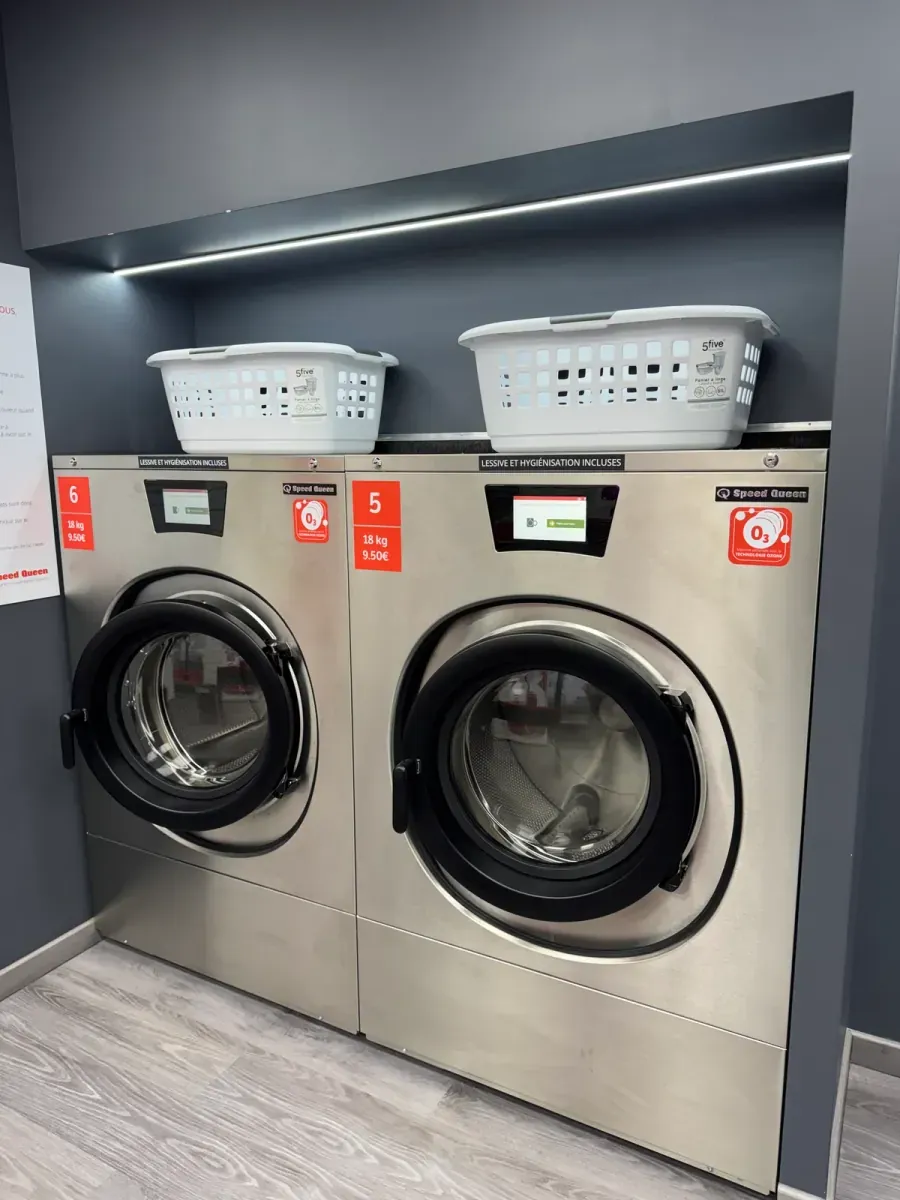
| 200x200 (double) | 18 kg | €9.50 |
| 220x240 (double) | 18 kg | €9.50 |
| 240x260 (king) | 18 kg | €9.50 |
| Pillow or bolster on its own | 7 kg | €4.50 |
| Duvet + cover + pillowcases | 18 kg and 7 kg, separately | €14.00 |
Two simple rules, true in any laundrette:
- The drum must stay three-quarters full at most. If you have to push to close the door, the machine is too small.
- A duvet and nothing else. Adding the cover or the pillowcases takes away the room the duvet needs to tumble. You pay for a cycle and get a mediocre result.
Why the kilos mean nothing
A duvet is light. A 220x240 weighs between 2 and 4 kg depending on its filling. On paper, a 7 kg machine should swallow it without a thought.
Except that it does not wash it. A duvet takes up all the room, it drinks several times its own weight in water, and once wet it forms a block that stops turning over. In a drum that is too small, that block stays packed for the whole cycle. Water and detergent circle around it and never get inside.
What washes a duvet is not the power of the machine. It is the empty space around it.
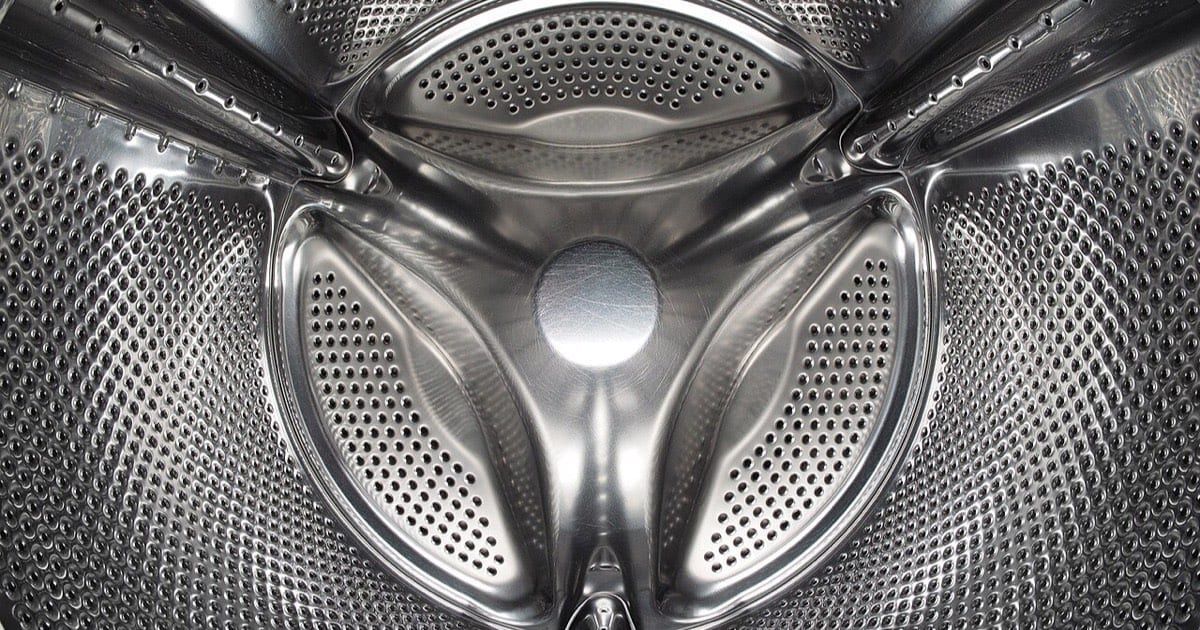
So where do the advertised kilos come from? From a division. Manufacturers build a drum, measure its volume in litres, then convert that into kilos with a rule of three. Depending on the ratio they pick, the same 180-litre drum is called 18 kg or 20 kg. The machine itself has not moved by a single litre.
The case is visible in the laundrette every day: the dryers are rated 13.7 kg on the manufacturer's sheet, and the sticker on the door says 13 kg. Same appliance, two numbers.
Here are the volumes that actually decide:
| Machine | Drum volume |
|---|---|
| Domestic 8 kg washing machine | about 50 litres |
| So-called 7 kg washer | 65 litres |
| So-called 18 kg washer | 180 litres |
| Dryer | 300 litres |
A 220x240 duvet needs 68 litres at least, a figure given by washing machine manufacturers themselves. Count on 75 litres for a 240x260. That is why a double duvet will never come out clean in a domestic machine, whatever the programme.
Down or synthetic: what changes
The filling changes little about the wash. It changes everything about the drying.
- Synthetic holds little water. It dries fast and recovers its loft on its own.
- Down and feather absorb far more and clump once wet. A duvet put away still damp in the middle will go mouldy, and that smell never leaves.
Which programme to choose
A duvet goes into the drum on its own. So the programme is chosen for its filling and for nothing else: the most fragile item decides.
| Your item | Programme | Why |
|---|---|---|
| Synthetic duvet | Synthetic Ozone | Reduced drum rotation, the filling distorts less |
| Down or feather duvet | Delicate Ozone | Minimum speed, it is the most fragile filling |
| Cover, throw, king-size sheets | Everyday Ozone | The stronger tumble washes better, and cotton takes it |
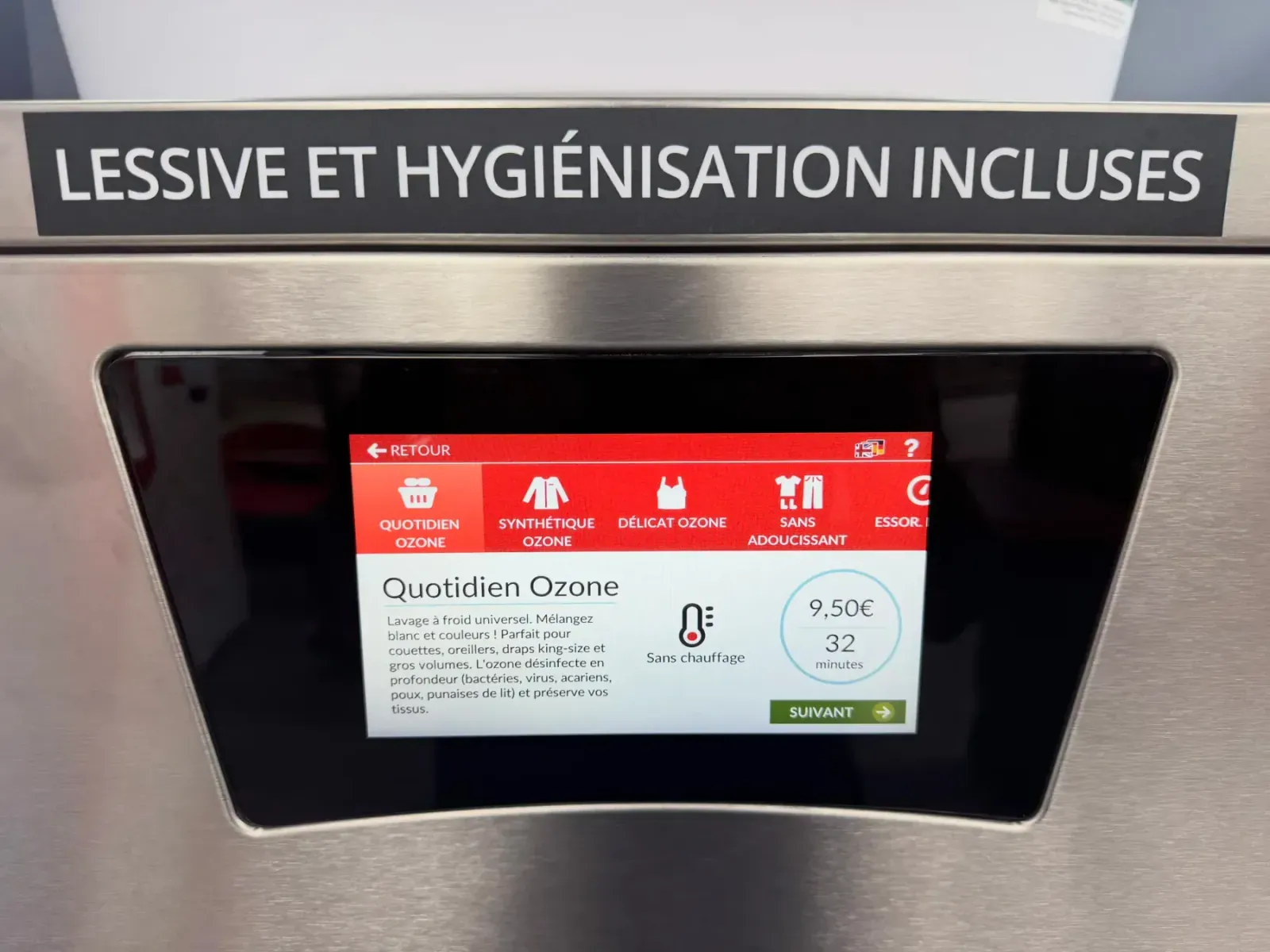
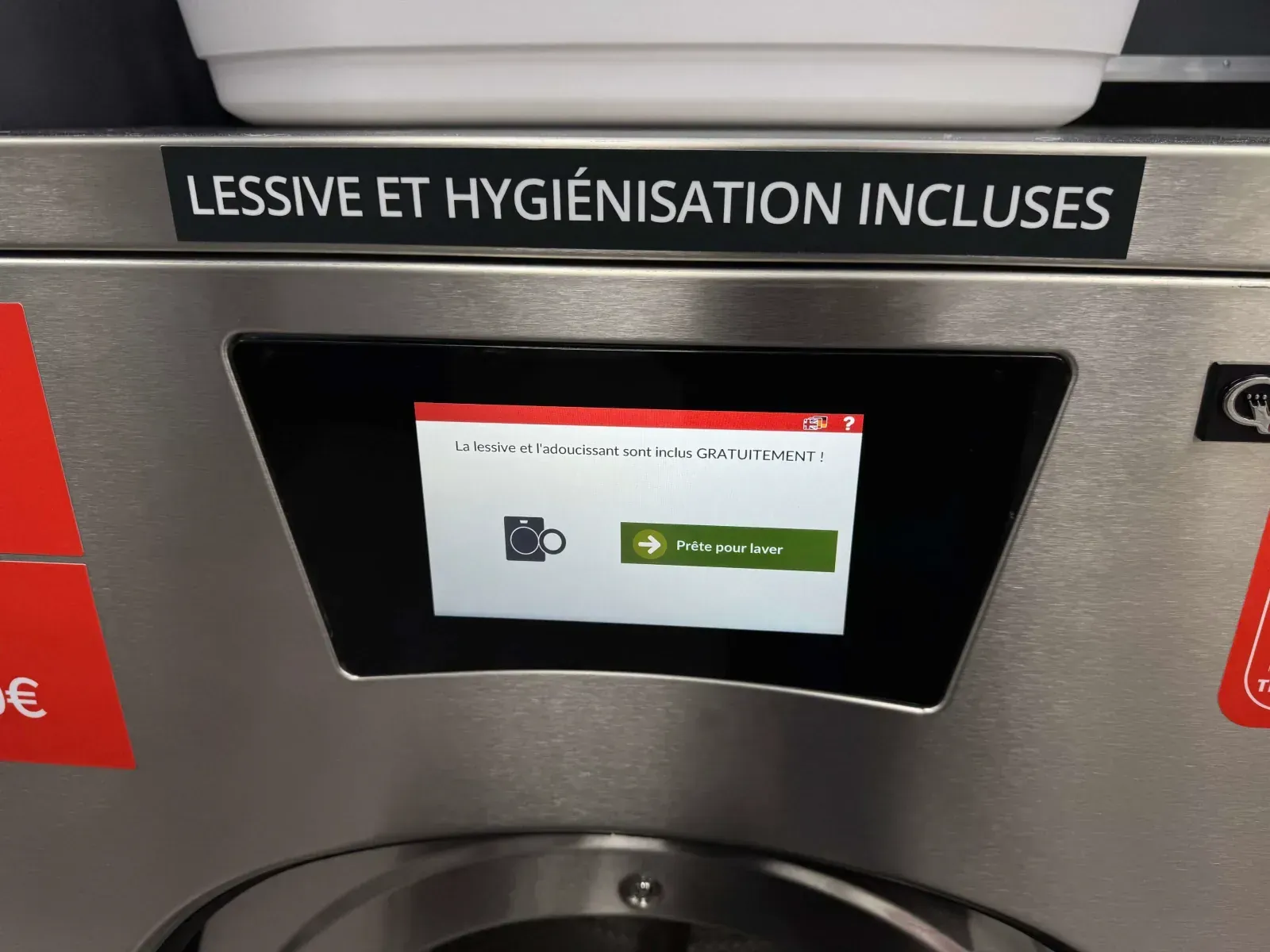
Everything is washed cold, on every cycle. That protects fibres and colours, and it lets you mix whites and colours without risk. Detergent and softener are dispensed automatically and included in the price. The detail of each cycle is on the wash programmes page.
Drying, the step not to rush
The wash takes 32 minutes. For drying, count on 30 minutes on high heat. On a very thick duvet, add 15 minutes.
Dryers are paid for in 15-minute blocks at €1.50 each, and the blocks run on from one another. Drying a duvet therefore costs €3.00, exceptionally €4.50.
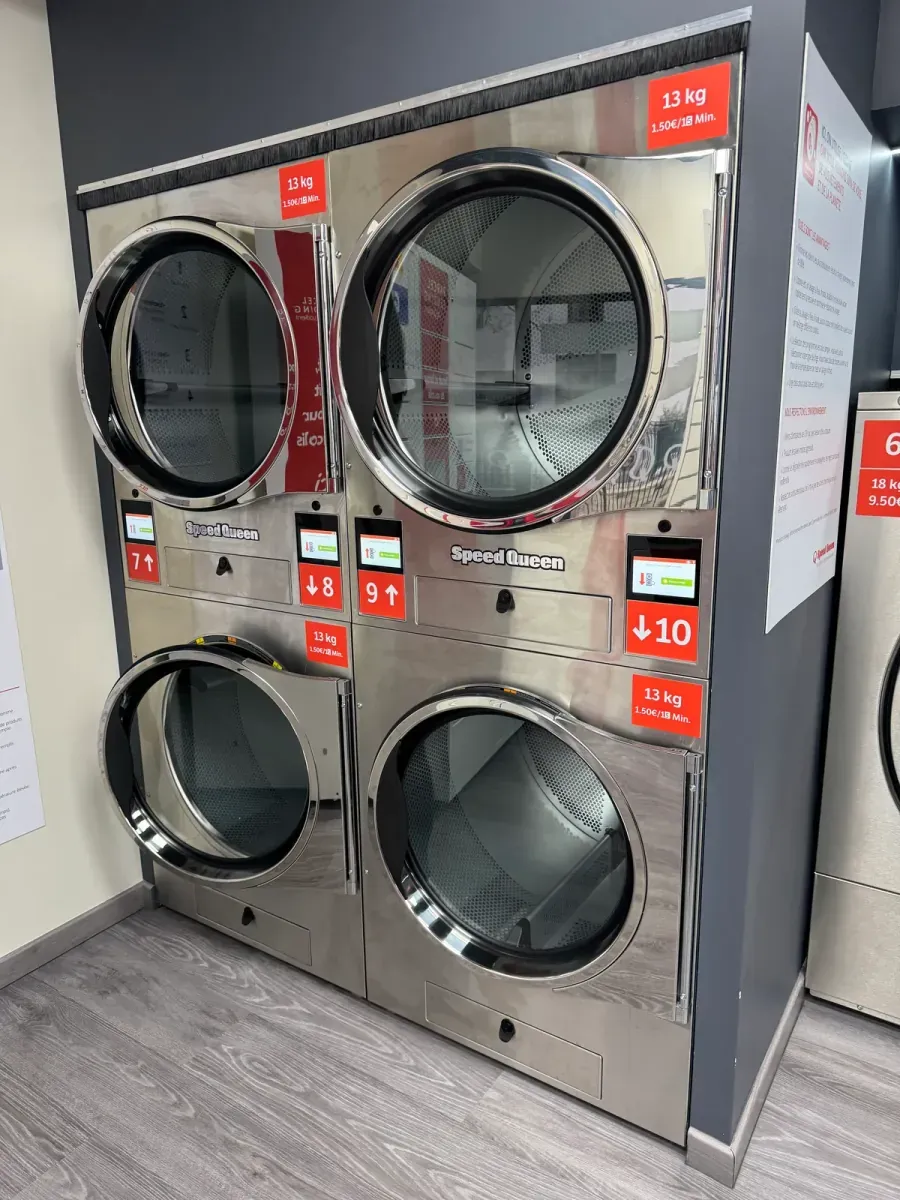
Elsewhere you routinely read an hour for synthetic and several hours for down. Two reasons explain the gap:
- The duvet arrives far less wet. The spin of a professional machine pulls much harder than a domestic one. Less water at the start means that much less drying.
- The dryer is bigger than the washer: 300 litres against 180. A dry, lofted duvet takes up far more room than a wet one, and air has to circulate around it. A domestic tumble dryer tops out around 110 litres. It has no room, so it takes hours.
Dust mites, bed bugs, smells: what the wash removes
A duvet is an ideal home for dust mites. It is warm, it is humid, and you spend a third of your life in it. Sometimes bed bugs join them, or head lice brought back from school, or simply a musty smell that will not go.
In an ordinary laundrette, all of that is dealt with by heat, and it takes a lot of it. You need 60 °C at least, sometimes more against bed bugs. At 40 °C, almost nothing happens. The trouble is that a duvet dislikes those temperatures: colours fade, fibres tire, and some fillings never recover.
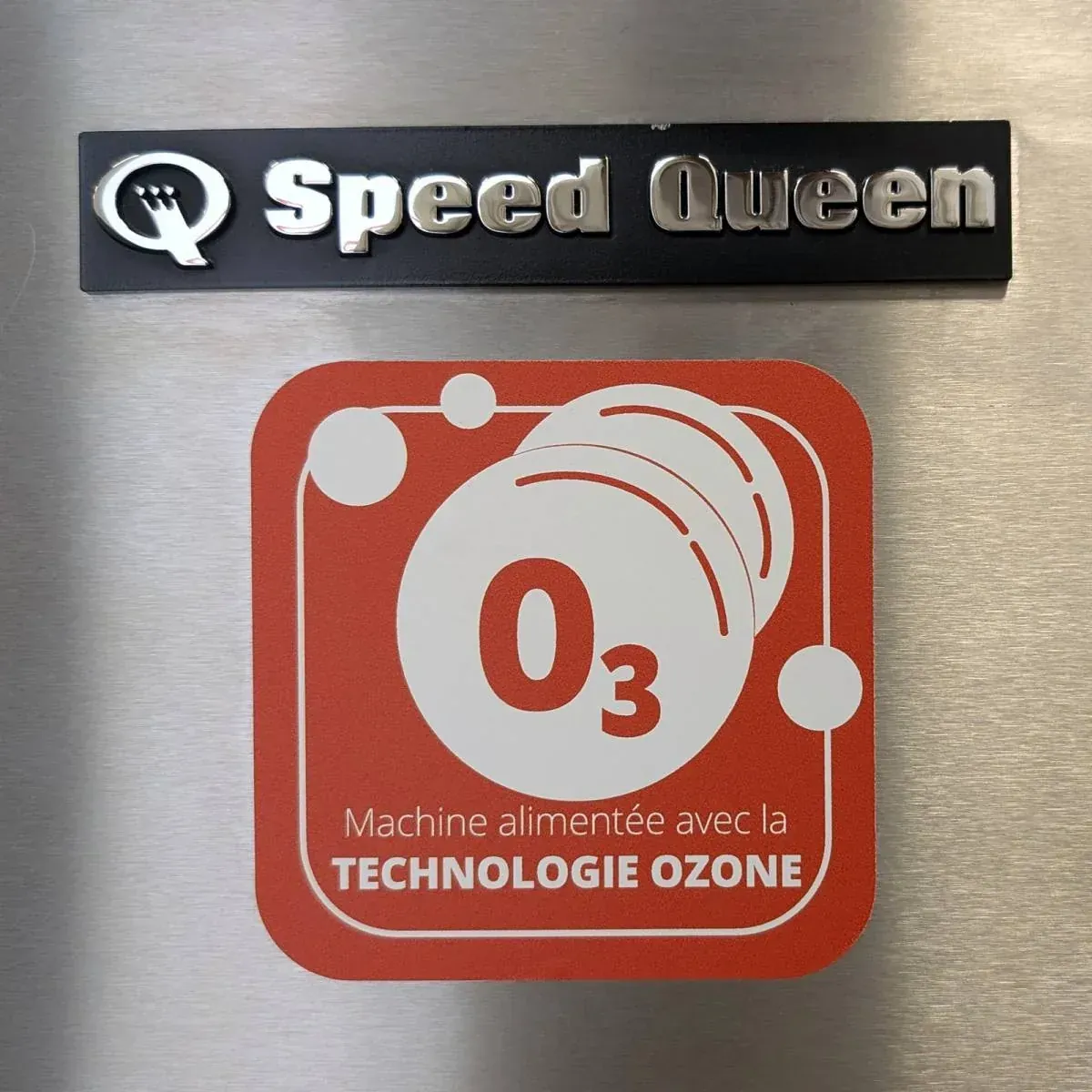
Here, it is not heat that disinfects, it is ozone. It is made on site from the air, then injected into the cold water of the drum, on every cycle and on every programme. The machine says so on its own screen before you pay: bacteria, viruses, dust mites, lice, bed bugs. It is the process hospitals and hotels use to disinfect linen without subjecting it to temperatures that damage it, and it is explained in full on the ozone disinfection page.
| Ordinary laundrette | Laverie Saussure | |
|---|---|---|
| What disinfects | heat, 60 °C minimum | ozone, in cold water |
| What the duvet goes through | faded colours, tired fibres | nothing, the drum stays cold |
| What it costs | often a paid option | included in the price shown |
Two useful points:
- Rinsing counts as much as disinfection. It is not the mites themselves that trigger symptoms, it is their droppings. They dissolve in the water and leave with it.
- Drying finishes the job. A duvet put away damp goes mouldy, and mould is one more allergen. If you have allergies, never skip the drying.
The price, here and at the dry cleaner
The total, with no surprises:
| Common case | Thick duvet | |
|---|---|---|
| 18 kg wash | €9.50 | €9.50 |
| Drying | €3.00 (30 min) | €4.50 (45 min) |
| Total | €12.50 | €14.00 |
| Time on site | about 65 minutes | about 80 minutes |
For comparison, 5àsec advertises a duvet offer at €19, with the anti-dust-mite treatment as a paid extra.
| Laverie Saussure | Dry cleaner, advertised offer | |
|---|---|---|
| Double duvet, washing and drying | €12.50 | €19 |
| Anti-dust-mite treatment | included on every cycle | optional extra |
| Turnaround | 75 minutes, you leave with it | drop off, then come back |
| Who does the work | you | them |
That last line is the real difference, and it cuts both ways. At the dry cleaner you drop it off and stop thinking about it. Here you load it, choose the programme and wait an hour and a quarter. In exchange you pay a third less, your duvet never leaves your sight, and disinfection is not one more box to tick.
The price list is what counts if this article has not been updated after a price change.
My expert recommendations
None of this costs anything or takes any time. It is what keeps a duvet clean between washes.
- Use a cover, and wash it every week. It is the first barrier, and by far the most effective.
- Do not make the bed straight away. Let the duvet breathe for half an hour, so the night's moisture evaporates. A bed made immediately traps that moisture, which is exactly what dust mites like best.
- Air the bedroom every day, even five minutes in winter. Dry air is their first enemy.
- Shake the duvet now and then. It stops the packed patches that eventually stop lofting for good.
- Hang it outside when you can, but keep it out of full sun, which yellows the fabric.
- Wash it two or three times a year, more often if there are allergies or if a pet sleeps on the bed.
- Count on five years, no more. A duvet that no longer lofts after drying has done its time. Washing it will not bring it back.

In short
- Think in litres of drum, not in kilos.
- Single: 7 kg machine. Double and up: 18 kg machine.
- The duvet on its own in the drum, three-quarters full at most.
- 32 minutes of washing, 30 minutes of drying, €12.50 all in.
- Dust mites, bed bugs, bacteria and smells leave with the ozone, cold, at no extra cost.
- Drying is the critical step: right through to the core, or the duvet goes mouldy.
Frequently asked questions
No machine will do, and washing it anyway would wreck the filling. Dry cleaning is the only answer. That label mostly appears on high-end goose down and on wool fillings.
That is a drying problem, not a washing one: it did not tumble enough, or it did not dry enough. Another pass in the dryer, with dryer balls, spreads the filling back out in most cases.
No. Two duvets in one drum means the tumbling room disappears. You get the result of a machine that is too small, having paid for a big one.
Better to split them. The pillows go in a 7 kg machine while the duvet takes the 18 kg one. It costs no extra time and washes far better.
Not here. That is exactly what ozone replaces: disinfection no longer depends on temperature. So you never have to choose between a clean duvet and an undamaged one.
The cycle deals with them: the machine's own screen lists lice and bed bugs among what the ozone destroys, and the cold wash means you never have to reach 60 °C. With bed bugs, wash everything that touches the bed in the same visit, duvet, pillows, sheets and covers: treating one piece is pointless if the others stay infested.
Two or three times a year is enough if it is protected by a cover washed every week. Go to three or four if someone has allergies, if a pet sleeps on the bed, or if the bedroom is poorly aired.
No. Detergent and softener are dispensed automatically by the machine and included in the price shown. There is nothing to bring, for the wash or for the drying.
- Bulky items
- duvet
- 18 kg machine
- drying
- bedding
- dust mites
- ozone
